Bringing Home Nutrition Vaccination Parasites Grooming Training Socialisation Exercise Sleep & Crate Health Safety Dental Travel Services Emergency
Dogsvilla · Indore · Est. 2016

The New Puppy
Parent Guide

Everything you need to raise a healthy, happy, well-mannered dog. Written by Dogsvilla's expert team — Central India's most trusted pet care facility for over 8 years.
2,600+
Pet Families Served
8
Years of Excellence
365
Days Open
Dogsvilla Facility
4.7 ★
432 Verified Reviews
01
First Steps

Bringing Your Puppy Home

The first 72 hours are the most critical for your puppy's adjustment. A calm, patient approach in this window will shape your entire relationship.

Before Day One — What to Buy
ItemWhy It MattersPriority
Stainless steel food & water bowlsHygienic, durable, bacteria-resistant — avoid plastic entirelyEssential
Breed-appropriate crateSafe den space — dramatically accelerates toilet trainingEssential
Soft bed + a cloth from the breederFamiliar scent of the mother reduces night-time anxiety significantlyEssential
Collar, ID tag & leashSafety and identification from day oneEssential
Puppy-specific kibbleFormulated for growth — adult food lacks the right nutrient ratiosEssential
Rubber & rope toysTeething relief and mental stimulation — prevents furniture destructionStandard
Enzyme-based cleaner sprayFully neutralises accident odour — ordinary cleaners leave traces that invite repetitionStandard
Puppy padsIndoor toilet training bridge for early weeksStandard
Soft-bristle grooming brushStart coat handling from week one — builds tolerance for lifetime groomingStandard
Vet-recommended flea/tick dropsPreventive parasite control — especially critical in Indore's climateStandard
Puppy-formulated shampooHuman shampoo (pH 5.5) disrupts dog skin (pH 7.0) — never substituteStandard
The First Day — Step by Step
Dogsvilla Tip

Request a cloth or small toy that carries the scent of the puppy's mother when you collect. Placing it in the crate for the first week is the single most effective intervention for reducing separation anxiety and night-time crying — it costs nothing and works remarkably well.

02
Nutrition

Feeding & Nutrition

What you feed your puppy in the first year determines the trajectory of their health for the next 15. Get this right.

Feeding Frequency by Age
6–12 Weeks
4×
meals per day. Small portions, consistent timing. Follow breeder guidance on quantity.
3–6 Months
3×
meals per day. Measure carefully — overfeeding at this stage sets poor metabolic patterns.
6–12 Months
2×
meals per day. Morning and evening, same time daily. Routine matters enormously.
12+ Months
2×
meals per day. Transition to adult food between 12–18 months, depending on breed size.
Recommended Kibble — Available in India
BrandWhy We Recommend ItBest For
Royal CaninBreed-specific ranges with precise nutrient ratios — widely available at pet stores and DogsvillaAll breeds
Purina Pro PlanHigh protein, backed by veterinary research, excellent palatabilityActive breeds
Farmina N&D Grain-FreePremium grain-free formulation, biologically appropriate ingredient ratiosSensitive stomachs
Drools Focus PuppyIndia-formulated Super Premium range with good value-to-quality ratioBudget-conscious
Pedigree PuppyReliable starter option, widely available across India, AAFCO-compliantFirst-time owners
Safe vs. Never Feed

Safe Home-Cooked Foods

🍗Boiled chicken breast — plain, unsalted, deboned
🍚Boiled rice or brown rice
🥕Boiled carrot, beans, pumpkin
🥚Well-cooked egg
🥛Plain dahi / curd — small amounts only
🧀Unsalted paneer — very small amounts
🍠Plain cooked sweet potato
🍌Banana — occasional treat only
🍉Watermelon — remove seeds and rind entirely
🐟Boiled fish — fully deboned, no seasoning

Never Feed — Toxic or Dangerous

🧅Onion, garlic, leek — toxic, causes anaemia
🍇Grapes & raisins — cause kidney failure, often fatal
🍫Chocolate & cocoa — toxic, potentially fatal
🍬Xylitol — in sugar-free sweets, gum, deadly
🥑Avocado — toxic to dogs
🍺Alcohol — even tiny amounts are dangerous
Tea, coffee, caffeine in any form
🌶️Spicy food, masalas, pickles
🥜Macadamia nuts
🍞Raw dough or yeast — causes bloating, toxic
Critical — Never Switch Food Abruptly

Transition over 7–10 days: 25% new / 75% old → 50/50 → 75% new / 25% old → 100% new. A sudden food change causes diarrhoea even between two premium brands. This rule applies every single time you change food.

03
Health Protection

Vaccination Schedule

Vaccines protect your puppy from diseases that kill. Follow this schedule without deviation. Keep the vaccination card safe — it is required for boarding, travel, and parks.

6 Weeks
DHPPi — First Dose
Distemper, Hepatitis, Parvovirus, Parainfluenza. Given by the breeder — request the card as proof.
8–9 Weeks
DHPPi + Coronavirus Booster
First vet visit if not already completed. Keep puppy away from unknown dogs and public areas until this is done.
10–12 Weeks
DHPPi Second Dose + Leptospirosis
Critical milestone. Do not allow contact with unvaccinated dogs or unverified outdoor ground before this dose.
12–16 Weeks
Rabies — Mandatory by Indian Law
Required for travel, boarding, park access, and dog events. No exceptions. Keep this certificate permanently.
14–16 Weeks
DHPPi Third Dose + Leptospirosis Booster
Final dose in the core puppy series. Two weeks after this, your puppy has full immune protection.
12 Months
Annual Boosters — DHPPi + Rabies + Lepto
Set a calendar reminder today. Annual boosters are non-negotiable — immunity wanes without them.
Every Year After
All Annual Boosters Repeated
Book at Dogsvilla's in-house veterinary service or your regular vet. Same time every year.
The Socialisation Hold — Understand This

Do not take your puppy to public parks, dog parks, or homes of other dogs until 2 weeks after the final puppy vaccine at 14–16 weeks. Until then, carry your puppy to new environments rather than letting them walk on unverified ground. The immune system is not fully protective before this point — and Parvovirus in particular can survive in soil for up to a year.

04
Parasite Control

Deworming & Parasites

India's warm, humid climate makes year-round parasite control non-negotiable. Indore's monsoon season particularly demands vigilance.

Deworming Schedule
2 Weeks Old
First Deworming
Completed by breeder. Request written confirmation.
4, 6, 8 Weeks
Every Two Weeks
Repeat until 8 weeks. Always dose by body weight — ask your vet for the exact calculation.
3, 4, 5, 6 Months
Monthly
One dose per month every month until 6 months of age.
6 Months Onward
Every 3 Months — For Life
Set a recurring phone reminder. This schedule is permanent and non-negotiable.
Tick, Flea & Mosquito Control
  • Spot-on drops (Frontline Plus, NexGard Spectra) — apply monthly to the back of the neck. Year-round in Indore's climate.
  • Tick collars (Seresto) — provide 8-month continuous protection. Ideal for dogs with regular outdoor or park exposure.
  • Daily checks during monsoon — inspect ears, between toes, and under the collar after every walk from July through September.
  • Removing a tick correctly — use fine-tip tweezers, grasp as close to the skin as possible, pull straight out with steady pressure. Never squeeze, burn, or apply oil — this forces bacteria into the bite.
  • Heartworm prevention — NexGard Spectra provides combined tick, flea, and Heartworm coverage in one monthly chew. Ask your vet about this during the monsoon season.
Monsoon Alert — July through September

Tick fever (Babesiosis) cases in Indore surge significantly during monsoon. Signs: high fever, pale gums, sudden weakness, reduced appetite. This requires a vet within 12 hours — do not wait overnight.

05
Coat & Hygiene

Grooming

Good grooming is preventive healthcare, not cosmetics. A well-maintained coat prevents infections, skin disease, and discomfort.

Grooming Frequency by Coat Type
Short Coat
Labrador, Beagle, Boxer
Minimal shedding management needed
Brush weekly · Bath every 4–6 weeks · Professional groom every 3 months
Medium Coat
Golden Retriever, Cocker Spaniel
Moderate maintenance requirement
Brush 2–3× per week · Bath every 3–4 weeks · Professional groom every 6–8 weeks
Long / Double Coat
Husky, Pomeranian, Shih Tzu
High maintenance — daily attention required
Brush daily · Bath every 2–3 weeks · Professional groom every 4–6 weeks
Curly / Wiry Coat
Poodle, Lhasa Apso, Maltese
Requires professional trimming — matting risk
Brush daily · Professional groom every 6–8 weeks without exception
Home Bath — Step by Step
1
Lukewarm Water
Test on your wrist. Never hot — dogs have sensitive skin. Never cold — creates aversion.
2
Wet Coat Fully
Saturate the entire coat before applying any shampoo. Dry patches repel product.
3
Puppy Shampoo Only
Human shampoo has the wrong pH. Never substitute — causes chronic skin irritation.
4
Rinse Thoroughly
Leftover shampoo is the number one cause of post-bath itching. Rinse twice if uncertain.
5
Dry Completely
Towel first, then low-heat dryer. No AC or fans until fully dry — wet fur and cold air causes respiratory issues.
6
Treat & Praise
Reward every time without exception. You are building a lifelong positive association with grooming.
Nail, Ear & Eye Care
Nails
Every 3–4 Weeks
If you hear clicking on tiles, they are too long. Avoid the pink 'quick' — cutting it causes pain and bleeding. When uncertain, let Dogsvilla's groomers handle it.
Ears
Weekly Check
Check for redness, foul odour, or dark discharge. Clean with cotton ball and vet-approved ear cleaner. Never insert cotton buds into the ear canal — causes damage.
Eyes
Daily Wipe
Wipe gently with a damp cotton pad each day. Some discharge after sleep is normal. Cloudiness, redness, or persistent discharge requires a vet visit.
Dogsvilla Grooming Services

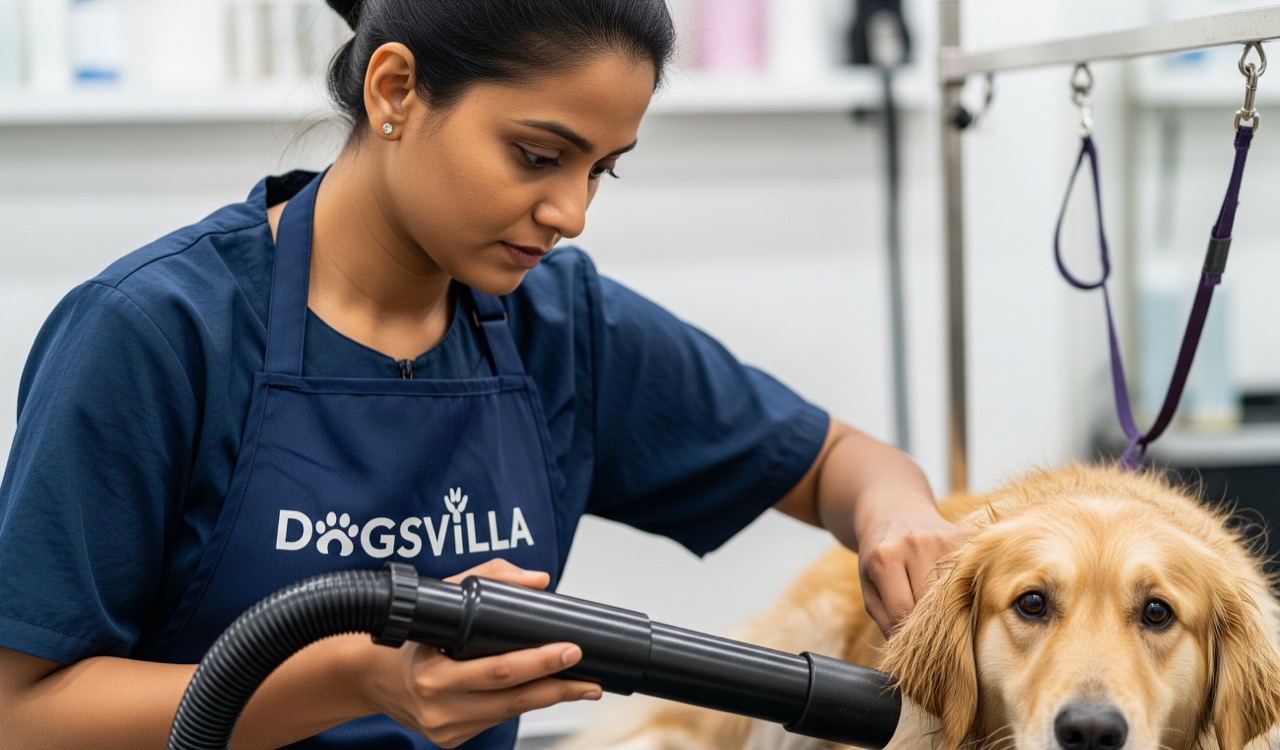
Certified groomers, premium world-class products, CCTV-monitored facility. Basic Bath & Brush from ₹550 through to full breed-specific styling packages. View grooming packages →

06
Behaviour

Training & Behaviour

Training is the language through which you and your dog communicate. Start on Day 1. The earlier you begin, the easier everything becomes.

The Five Principles — Follow These Without Exception
  • Positive reinforcement only. Reward the behaviour you want; ignore what you don't. Punishment creates fear and suppresses behaviour without teaching an alternative.
  • Short, frequent sessions. 5–10 minutes, 3–4 times per day. Puppy brains tire quickly — ending on a success is more valuable than extending a session.
  • Complete consistency. Every person in the household must use identical commands and rules. Inconsistency confuses puppies and dramatically slows progress.
  • Never punish after the fact. Dogs cannot connect delayed consequences with past behaviour. Scolding for an accident you found 10 minutes later teaches nothing and damages trust.
  • Always end on a win. If training stalls, ask for something easy — a simple Sit — reward it, and stop. Always end positively.
Week-by-Week Command Plan
Week 1–2
Sit + Name Recognition
Sit: Hold treat above nose, move slowly back. As bottom lowers, say "Sit" and reward. Repeat 10 times per session.

Name: Say name, the instant they look at you, reward. Never use the name when calling them for something negative.
Week 2–3
Stay + Come
Stay: Ask to sit, say "Stay", take one step back, return and reward before they move. Extend distance gradually over days.

Come: Crouch down, open arms. Make this the most exciting word they know. Never call "come" to do something they dislike.
Week 3–4
Down + Leave It
Down: From sit, move treat to floor between front paws. When elbows touch the ground, say "Down" and reward immediately.

Leave It: Cover treat with hand, wait for disengagement, then reward from the other hand. Critical for safety outdoors.
Week 4–6
Loose-Leash Walk + Place
Walk: The moment the leash tightens, change direction. Reward heavily when walking beside you with slack in the lead.

Place / Bed: Direct to a designated mat and reward for staying. Invaluable during mealtimes, visitors, and high-excitement moments.
Toilet Training — The Method That Works
Dogsvilla Training Programmes

Central India's only internationally certified dog training and behaviour school. 1,400+ dogs trained. Puppy classes, basic obedience, advanced training, behaviour correction, and Board & Train programmes. Satisfaction guaranteed. Enrol from 8 weeks of age →

07
Development

Socialisation

The socialisation window opens at 3 weeks and begins closing at 14 weeks. What your puppy experiences here — or doesn't — determines their temperament for life.

The Most Important Fact About Puppies

A puppy not adequately socialised before 16 weeks carries a significantly higher lifetime risk of anxiety, reactivity, noise phobias, and fear-based aggression. This developmental window cannot be reopened. Socialisation is not optional enrichment — it is as medically critical as vaccination. Treat it accordingly.

What to Expose Your Puppy To
CategorySpecific ExposuresHow to Do It
PeopleChildren, elderly people, men with beards, people in uniforms, visitors of all typesPair every introduction with treats and calm praise
SoundsTraffic, thunder, pressure cooker, mixer-grinder, music, firecrackers (recordings first)Start at low volume, increase gradually, always treat and praise
EnvironmentsLifts, stairs, tiles, grass, mud, car rides, busy markets (carry if unvaccinated)Carry your pup until fully vaccinated — no unverified ground
AnimalsCats, vaccinated dogs, birds from a safe distanceBrief, controlled, positive — never force interaction
Body HandlingPaws, ears, mouth, tail, gums — touched dailyThis directly prevents fear at vet and groomer appointments for life
ObjectsUmbrellas opening, balloons, bags, bicycles, motorcycles, fansApproach at the puppy's pace — never push toward something frightening
The Critical Rule

If a puppy shows fear — cowering, tail tucked, backing away, refusing treats — do not force interaction. Increase distance until the puppy can observe from a comfortable threshold, reward calm interest, and gradually decrease distance over multiple sessions. Forced exposure to feared stimuli does not desensitise; it sensitises.

08
Physical & Mental Health

Exercise & Play

Over-exercise in puppyhood causes lasting joint damage. Under-exercise causes chronic boredom-related behaviour problems. Precision matters.

Exercise Guidelines by Age
AgeExercise GuidelineWhat to Avoid
Under 12 weeksFree indoor play only. Short garden exploration sessions.Forced walks, stairs repetitively, jumping
3–4 months5 minutes per month of age, twice daily. (3 months = 15 min × 2)Running on hard surfaces, high-impact play
4–6 monthsShort structured walks plus play sessionsRepetitive jumping, extended stair climbing
6–12 months20–30 minute walks twice daily, plus training sessionsHigh-impact activities until growth plates close
12+ monthsBreed-appropriate. Active breeds require 45–90 minutes daily.Over-restriction — adult dogs need real exercise
Mental Exercise — The Overlooked Half
Indore Summer Protocol — April through June

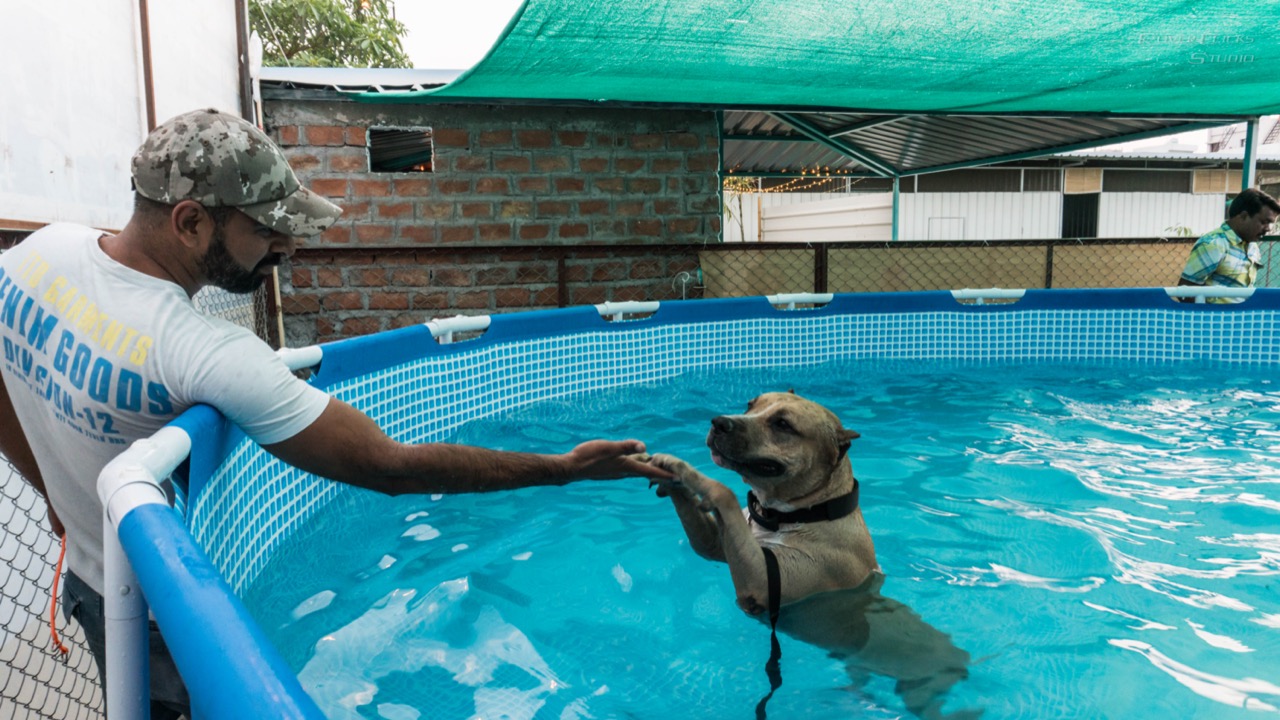
Walk only before 7:30 AM or after 7:00 PM. Test pavement temperature by pressing the back of your hand for 5 seconds — if it is uncomfortable for you, it will burn your puppy's paw pads. Always carry water. Heatstroke signs: excessive panting, bright red or pale gums, drooling, vomiting, collapse. This is a life-threatening emergency — wet the dog with cool (not cold) water immediately and drive directly to a vet. Do not wait. Dogsvilla's swimming pool provides safe, supervised exercise throughout summer.

09
Rest & Routine

Sleep & Crate Training

Growth hormone is released during sleep. A well-slept puppy develops better physically and cognitively. Never disturb a sleeping puppy.

6–10 Weeks
18–20h
Almost continuous napping. Do not interpret this as illness — it is essential development.
10–16 Weeks
16–18h
Still primarily sleeping. Short awake periods for feeding, play, and toilet training.
4–6 Months
14–16h
Longer active periods. Sleep remains the majority of the day.
6–12 Months
12–14h
Adolescent phase. Energy increases significantly but rest remains critical.
Crate Training — Seven Days to a Safe Den
Day 1–2
Open Door Exploration
Door stays open. Place treats randomly inside. Let curiosity drive investigation. Zero pressure, zero forcing.
Day 3–4
Meals Inside the Crate
Feed all meals inside the crate with the door remaining open. The crate now equals food — a powerful associative foundation.
Day 4–5
Door Closed During Meals
Close the door while the puppy eats. Open it before any fussing begins. Extend the closed duration gradually — seconds at first, then minutes.
Day 6–7
Leave the Room
With the crate closed, step out of the room briefly. A stuffed Kong inside makes your absence a positive event rather than a stressful one.
Week 2 Onward
Extend Absence and Duration
Gradually increase both time and your distance from the crate. Your puppy now has a secure, self-chosen den. This is the foundation for separation tolerance.
Maximum Crate Time — Non-Negotiable

The puppy's age in months, plus one hour. A 3-month-old puppy should not be crated for more than 4 hours. Under 8 weeks: maximum 1 hour at a time. Always ensure a toilet break immediately before crating. Never use the crate as punishment — it will destroy the positive association you have built.

10
Veterinary Knowledge

Health Issues & Warning Signs

Knowing the difference between normal puppy behaviour and a medical emergency has saved lives. Study this chapter before you need it.

Common Health Conditions
ConditionSignsAction Required
ParvovirusBloody diarrhoea, severe vomiting, extreme lethargy, complete appetite lossEMERGENCY — vet immediately. Can be fatal within 24–48 hours without treatment.
DistemperRunny nose, persistent cough, seizures, eye and nose dischargeEMERGENCY — vet immediately. Highly contagious, often fatal.
Tick Fever (Babesiosis)High fever, pale gums, sudden weakness, dramatically reduced appetiteVet within 12 hours. Particularly common in Indore during monsoon season.
GastroenteritisVomiting, loose stools, lethargyVet within 24 hours. Withhold food for 4–6 hours; keep water freely available.
Ear InfectionHead shaking, scratching at ears, foul odour, dark waxy dischargeVet within 2–3 days. Do not put oil or water in the ear canal.
Kennel CoughDry honking cough, runny nose, mild feverVet within 24–48 hours. Isolate from other dogs immediately.
Skin AllergiesPersistent itching, redness, hair loss, hot spotsVet within one week. Can be food-triggered or environmental.
Worm InfestationPot belly, poor coat condition, scooting, visible worms in stoolDeworm per schedule. Vet visit if symptoms are severe.
Go to a Vet Immediately — No Exceptions

Seizures or collapse · Difficulty breathing or blue/pale gums · Blood in vomit or stool · Suspected poisoning from chocolate, grapes, onion, or xylitol · No urination for more than 12 hours · Extreme lethargy where the puppy cannot stand or walk · Swollen hard abdomen (potential bloat — life-threatening in large breeds).

Monthly Home Health Check
Body
Weight & Coat
Weigh monthly. Run your hands along the entire body — feel for lumps, bumps, or tender spots. Sudden weight loss is always worth investigating.
Face
Eyes, Ears & Gums
Eyes should be clear and bright. Ears should smell neutral. Gums should be pink and moist — press lightly, pink should return within 2 seconds.
Extremities
Paws & Nails
Inspect pads for cracks or redness. Check between toes for ticks or embedded debris. Nails should not be clicking on hard floors.
11
Environment

Puppy-Proofing Your Home

Puppies explore the world with their mouth. Every hazard in your home is a hazard for your puppy. Complete this walkthrough before they arrive.

HazardThe RiskSolution
Electrical wires & charger cablesElectrocution, potentially fatalCable management boxes. Socket covers. Block access to the area entirely where possible.
Cleaning products & medicinesPoisoning — most household cleaners are acutely toxic to dogsLocked cabinets at height. Puppies can open lower-level doors and drawers.
Toxic houseplantsOrgan failure depending on speciesRemove or place completely out of reach: Dieffenbachia, Aloe Vera, Peace Lily, Pothos, Philodendron.
Small objects — coins, buttons, rubber bandsIntestinal blockage requiring emergency surgeryKeep all floors completely clear. Establish a zero-tolerance habit for items left on the floor.
Stairs and balconiesFalls causing fractures or spinal injuryBaby gates at all stairwells and balcony access points until 4 months of age.
Kitchen bins and food wasteCooked bones splinter and perforate intestines; onion peels cause anaemiaLidded bins only. Never leave food waste accessible, including compost.
Open water containersDrowning — puppies can drown in shallow waterCover all buckets, tubs, and water tanks. This is non-negotiable during the first months.
Slippery tile floorsHip dysplasia risk — repeated sliding damages developing joint structuresNon-slip mats in all high-traffic areas, especially kitchen and living room.
Gaps behind furniture and appliancesGetting stuck; chewing concealed wiringBlock gaps with cardboard or appropriate mesh. Fridges and washing machines conceal power cables.
12
Oral Health

Dental Care

Dental disease affects 80% of dogs by age three. Starting a brushing routine in the first week makes lifelong dental health effortless — starting at age two makes it very difficult.

Week 1 Onward
Daily Mouth Handling
Gently touch and lift lips, touch gums and teeth daily. This builds tolerance for dental procedures and vet examinations for the puppy's entire life.
8–10 Weeks
Introduce Finger Brush
Use a silicone finger brush with puppy-specific toothpaste — chicken or peanut butter flavour are most accepted. Keep sessions under 60 seconds.
3–4 Months
Transition to Toothbrush
Move to a soft-bristle toothbrush. Brush at minimum 3 times per week — daily is the professional standard. Always use pet-specific toothpaste.
Never
Human Toothpaste — Toxic to Dogs
Fluoride is toxic to dogs. Do not substitute under any circumstances. Pet-specific toothpaste is the only acceptable product.
Signs Requiring a Dental Appointment

Persistent bad breath beyond normal puppy breath · Yellow or brown tartar on teeth · Bleeding or swollen gums · Dropping food while eating · Pawing at the mouth · Reluctance to chew. Annual professional dental examination is recommended — cleaning under anaesthesia may be required by age 2–3 without consistent home care.

13
Mobility

Travelling with Your Puppy

India has specific regulations for pet travel across all transport modes. Understand these before booking anything.

Car Travel
  • Crate or certified car harness always. A loose dog in a moving vehicle is a danger to the animal and every passenger. This is non-negotiable.
  • Motion sickness: Withhold food for 2 hours before travel. Short practice drives around the block significantly reduce car anxiety over time.
  • Stop every 2 hours for water and a toilet break — not optional on longer journeys.
  • Never leave your puppy in a parked car. Interior temperatures in Indore's summer reach 60°C within minutes. Heatstroke at these temperatures is fatal within 10 minutes.
Train & Air Travel — India
  • Indian Railways: Pets travel in a dedicated pet coupe. Requires pre-booking at the station parcel office, a valid vet health certificate, and the puppy's vaccination record.
  • Air travel: Dogs under approximately 7 kg may travel in-cabin on most airlines. Larger breeds travel as accompanied cargo. An IATA-compliant crate is mandatory in all cases.
  • Health certificate validity: Must be issued within 10 days of the date of travel. Plan the vet appointment accordingly.
  • Airlines accepting pets: IndiGo, Air India, SpiceJet. Confirm current policy directly with the airline before booking — pet policies change frequently.
Travelling Without Your Puppy — Dogsvilla Boarding

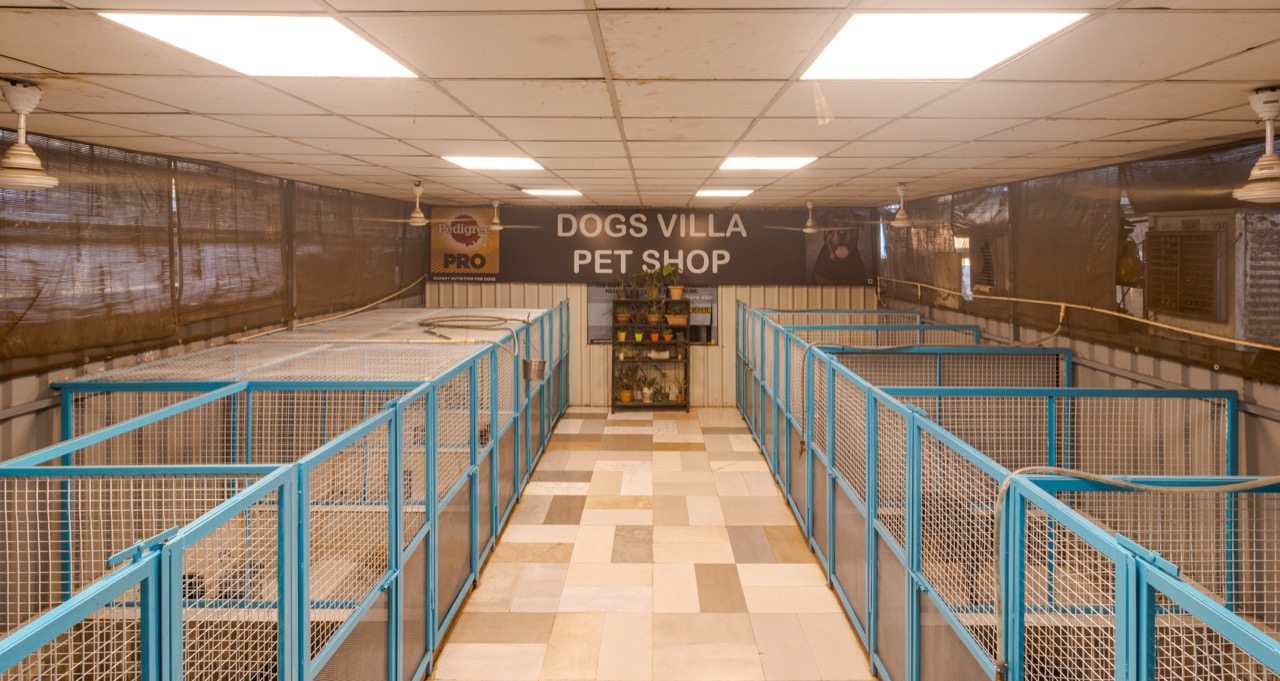
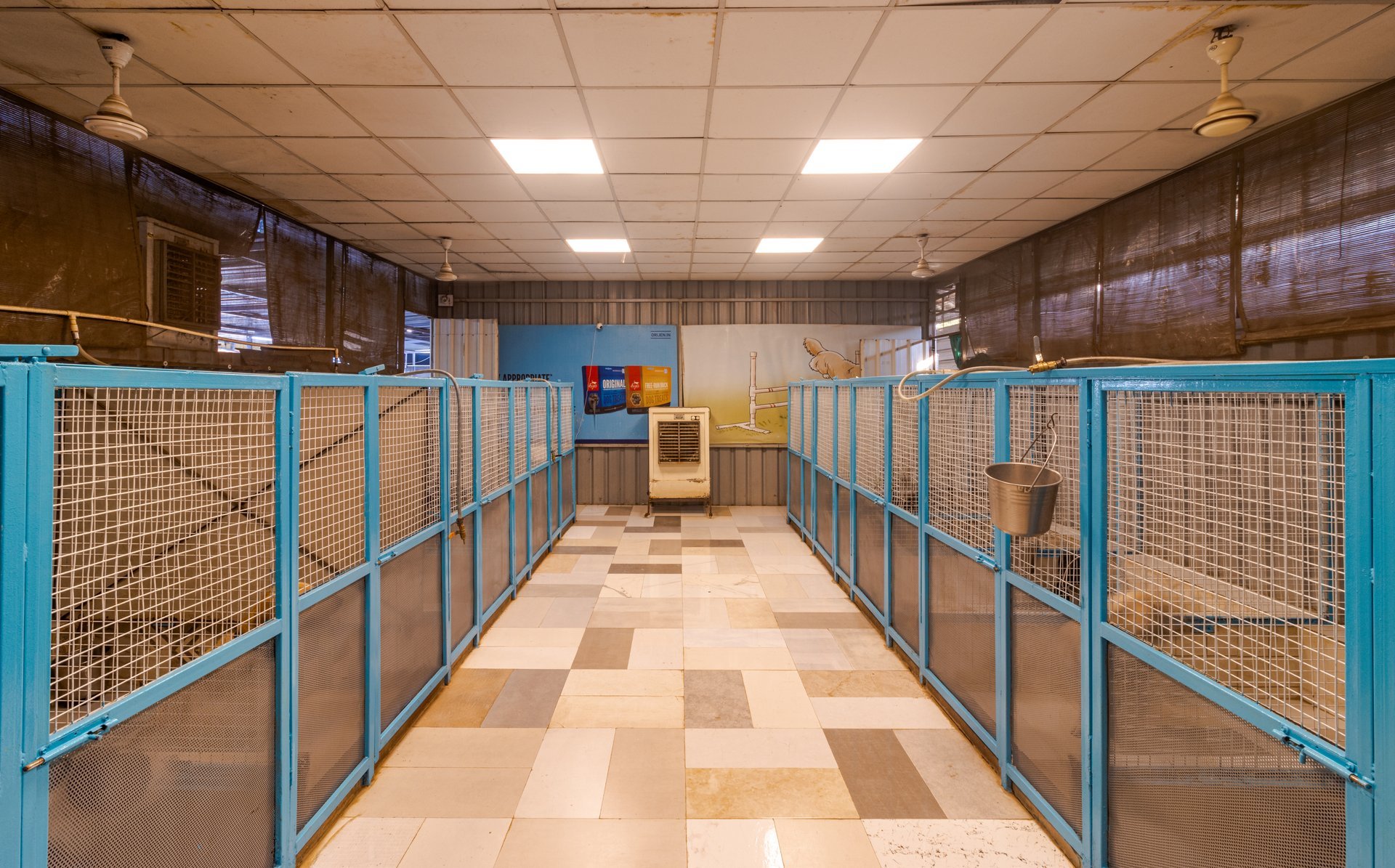
70 climate-controlled kennels with mist-cooling, 24/7 expert supervision, daily exercise, regular photo updates, and optional grooming add-ons. The most trusted boarding facility in Central India. View boarding packages and book →

Dogsvilla

Our Services for Your Puppy

Central India's only full-service pet facility — everything your puppy needs, from boarding and training to grooming, swimming, and adoption.

Boarding
₹550 – ₹950 / Night
Dog Boarding
70 climate-controlled kennels. 24/7 expert care. CCTV monitored. Mist-cooled in summer. Trusted by 2,600+ families.
Book a Stay →
Training
₹500 – ₹2,50,000
Dog Training
Central India's only internationally certified training school. Puppy classes to advanced behaviour correction. 1,400+ dogs trained.
Enrol Now →
Grooming
₹550 – ₹2,750
Pet Grooming
Certified groomers. Premium world-class products. CCTV-monitored facility. Basic bath to breed-specific full groom.
Book Grooming →
Swimming
Contact for Pricing
Dog Swimming
Central India's first purpose-built dog pool. Staff-assisted sessions. Drying included. Ideal exercise during summer months.
Learn More →
Dog Park
2 Free Sessions · ₹200 / Extra
Dog Park
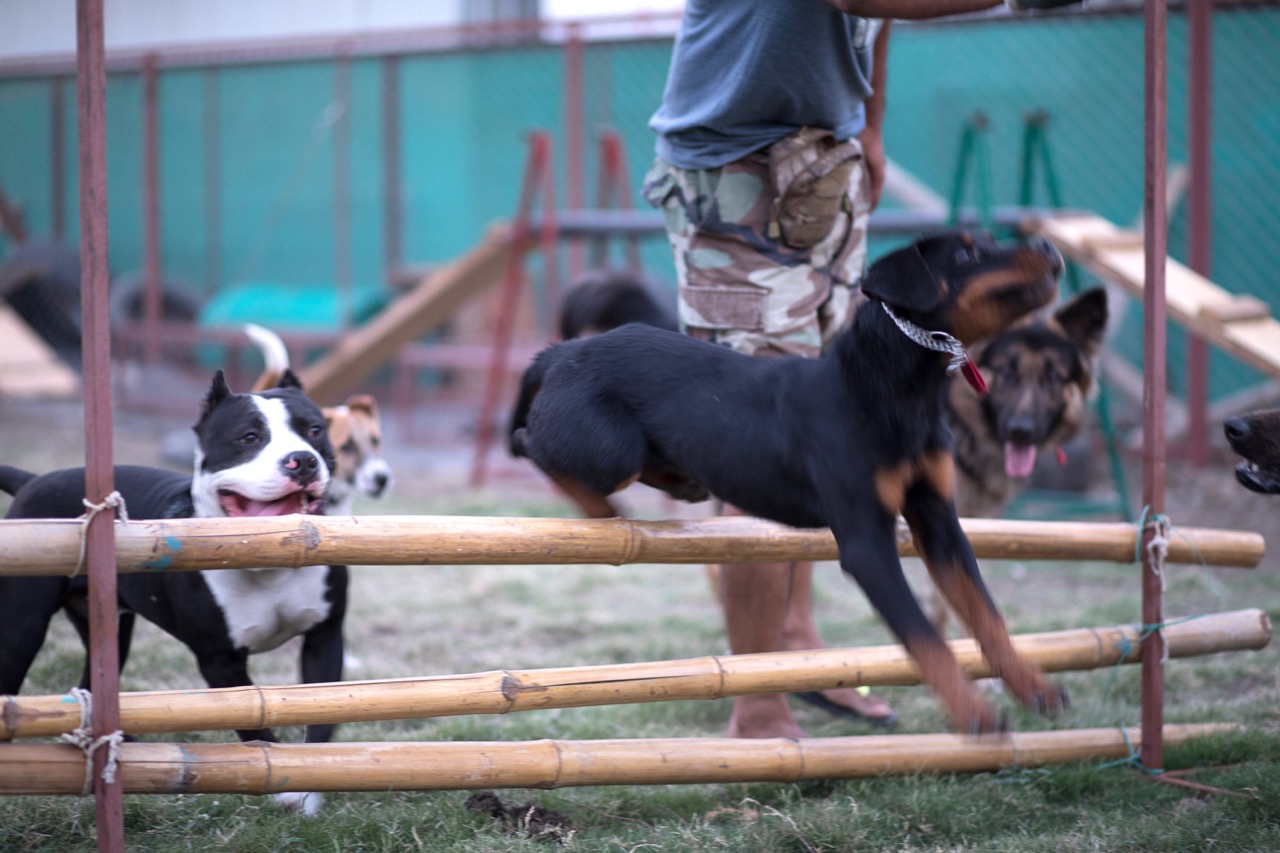
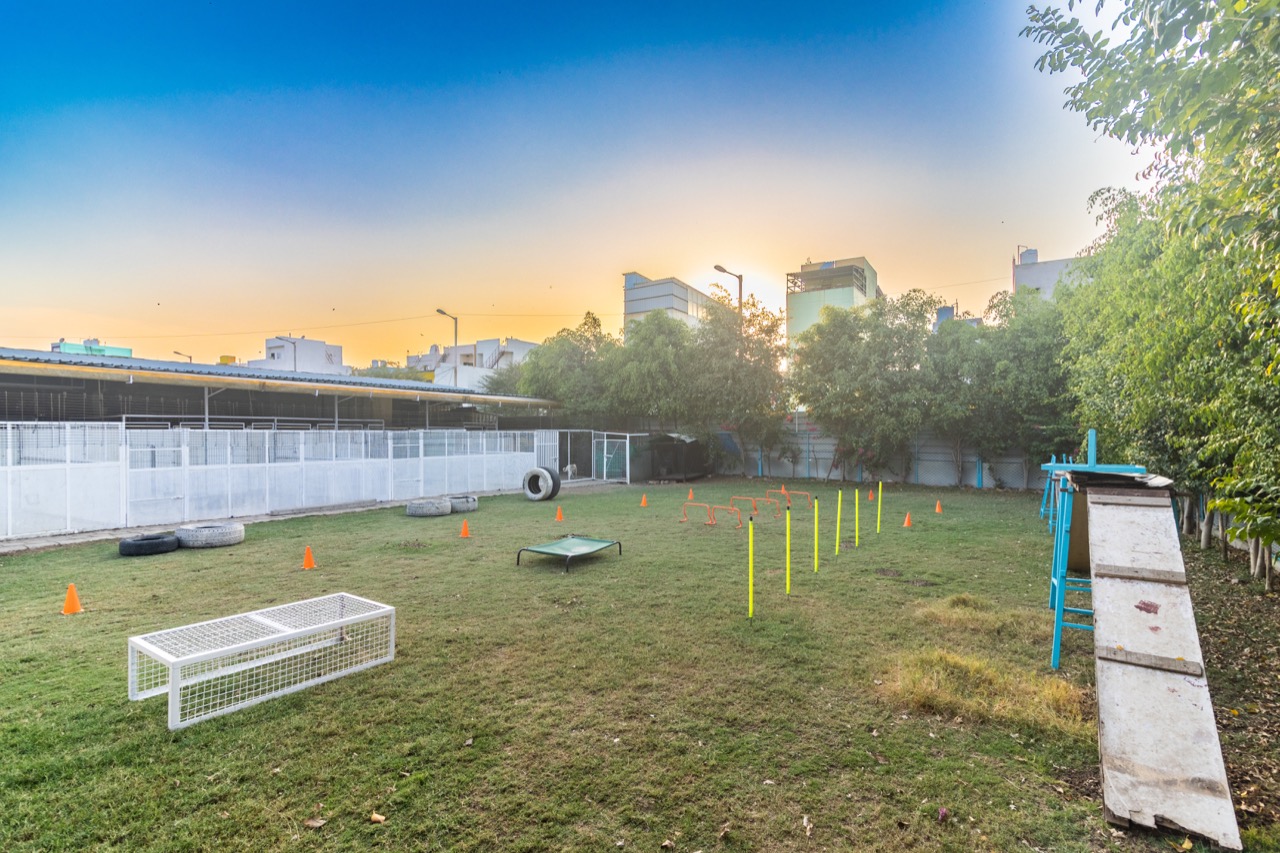
5,000 sq ft of lush green off-leash space. The only dedicated dog park in Indore. Open 11 AM to 6:30 PM daily.
Visit the Park →
Adoption
₹2,500 – ₹5,000
Pet Adoption
300+ pets placed in loving homes. Every adoption includes vet check, behaviour assessment, and post-adoption support.
Adopt a Pet →
Normal Vital Signs
🌡️
Body Temperature
38.3 – 39.2°C
❤️
Heart Rate
120 – 160 bpm
🫁
Breathing Rate
15 – 40 / min
😁
Gum Colour
Pink & moist
If Your Puppy Eats Something Toxic

Toxic Ingestion Protocol

01
Do Not Induce Vomiting
Unless your vet specifically instructs you to on the phone. Inducing vomiting for some substances causes more damage than the substance itself.
02
Document What Was Eaten
Note the substance, the approximate quantity, and the time of ingestion. Keep the packaging or plant. You will need this information at the clinic.
03
Call Your Vet Immediately
Do not wait for symptoms to appear. With toxic ingestion, time is the critical variable. Describe exactly what happened.
04
Go to the Clinic Now
Bring the packaging, plant, or a photograph of the substance. Drive directly — do not stop.
Your First 30 Days — Complete Checklist
Day 1
Book the first vet appointment within 48 hours of bringing puppy home
Week 1
Begin crate training and toilet training from Day 1 — consistency is everything
Week 1
Start name recognition and Sit command — the foundation of all future training
Week 2
Begin socialisation actively — new sounds, surfaces, people, and environments every single day
Week 2–3
First deworming dose if not completed by the breeder
Week 3
Set up the complete vaccination schedule with your vet — book all dates in the diary now
Week 4
Establish daily grooming routine — brushing, paw handling, ear and eye checks
Month 1
Enrol in a Dogsvilla puppy class — professional training and safe, supervised socialisation
Save Now
Add to phone as Pet Emergency — Dogsvilla: +91 881 981 7773

Dogsvilla

Central India's No. 1 Pet Care Facility · Indore, Madhya Pradesh · Open 365 Days